
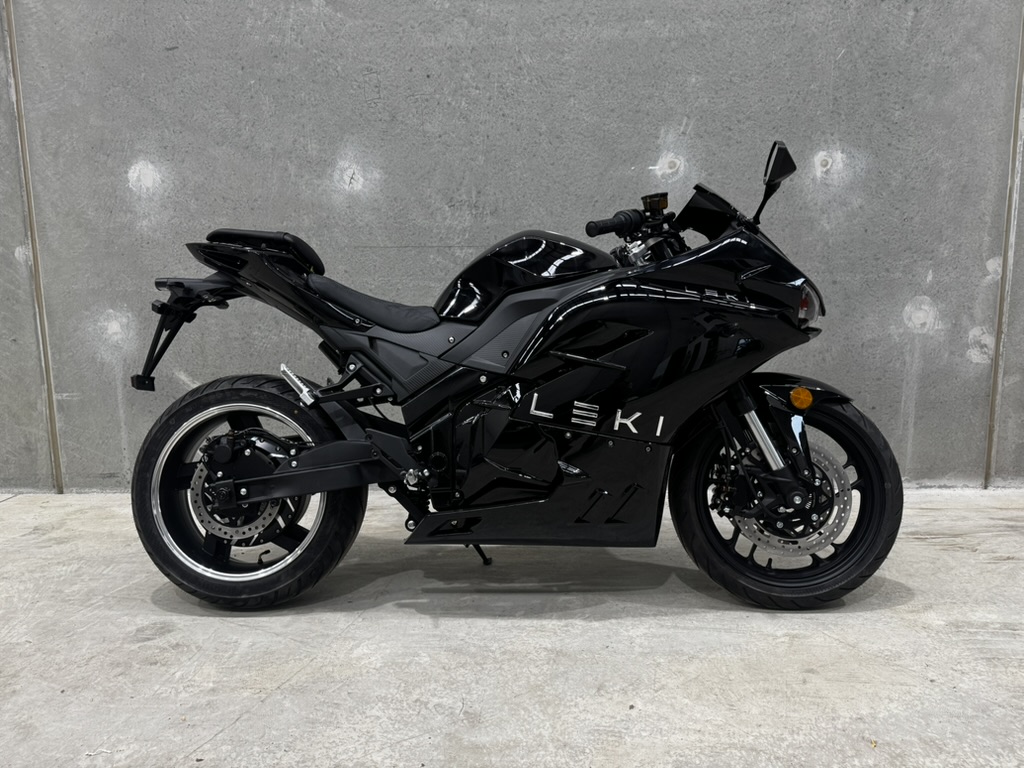
546 kg of CO₂,
not emitted.
That's what one LEKI abates in a year of ordinary riding — 5,199 km at zero tailpipe emissions instead of 10.5 kg of CO₂ per 100 km out of an equivalent petrol bike. A motorbike already uses a fraction of the road, rubber and steel a car does. Take the engine out and the commute stops burning anything at all.
546 kg abated, every year
Based on the Australian average of 5,199 km per bike per year and 10.5 kg of CO₂ per 100 km for an equivalent ICE motorcycle. Multiply that across a fleet and it becomes 15,561,000 kg of CO₂ a year — the electricity use of 3,028 homes, or 35,992 barrels of oil left in the ground.
Nothing out the back
No exhaust, no idling in traffic, no cold-start plume outside a school gate. Zero tailpipe emissions and near-zero noise, every single trip.
Charge it on your own roof
In-tank Type 2 port into a normal household socket — about $2.33 for a full charge. On rooftop solar during the day your commute runs on sunlight and emits nothing at either end.
Fewer consumables, full stop
No engine oil, no oil filters, no coolant, no exhaust to replace. Tyres, pads and an annual battery health check is the whole list — so there's far less waste heading to landfill over the life of the bike.
Assembled here, not freighted in finished
Bikes are assembled at our HQ in Totness, twenty minutes south-east of Adelaide. Frames are finished locally and battery packs are balanced and stress-tested one at a time, so shorter supply legs and parts stocked in SA.
Built to be kept and repaired
Cells are rated to 2,000 charge cycles to 80% capacity and every bike carries a 3-year warranty. Packs come back through our own workshop at end of life rather than becoming your problem.
LEKI E1 Surge
Agile, efficient, quick enough to make petrol bikes feel prehistoric. Full torque from zero, ABS on both ends, top speed north of 170 km/h — and still LAMS-approved.
- Top speed
- 170 km/h
- Range
- up to 160 km
- Charge
- ~4 hr / Type 2
- Weight
- 128 kg
Straight answers.
How much CO₂ does riding a LEKI actually save?
About 546 kg per bike per year. That's the Australian average of 5,199 km ridden annually against 10.5 kg of CO₂ per 100 km for an equivalent petrol motorcycle. Charge on rooftop solar and the upstream figure drops further again.
Isn't the electricity still generated from coal?
Some of it, depending on your state and time of day — but even on grid average power an electric bike comes out well ahead of a petrol one, because electric drivetrains waste far less energy as heat. Charge during the day on solar and it's effectively zero.
How much does a full charge actually cost?
About $2.33 on standard Australian household power, which works out around $2.20 per 100 km ridden. On rooftop solar during the day it is effectively free.
What happens to the battery at end of life?
Cells are rated to 2,000 charge cycles to 80% capacity, so most riders will never reach it. When a pack is done we take it back through our Totness workshop rather than leaving you to deal with it.
Do I need a home charger installed?
No. The in-tank Type 2 port charges from a normal wall socket, and works on public Type 2 chargers when you are out.
Ready when you are.
Swap the servo for a power point. One bike is 546 kg of CO₂ a year that never happens — book a ride, or take one straight home.
*Ride-away pricing varies by state. Registration and stamp duty are calculated at handover.